
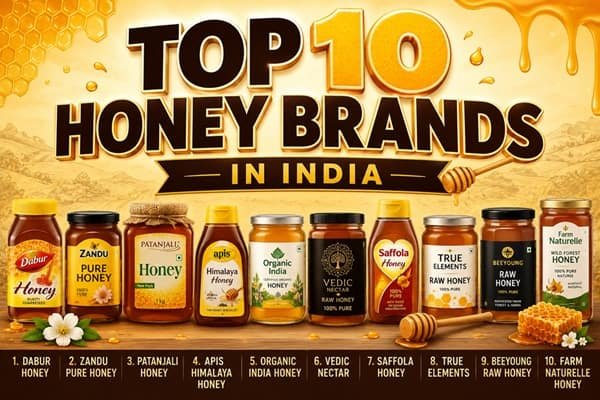
Let me be real with you.
You searched for “top 10 honey brands in india” because you finally realized that the honey in your pantry might be fake. Or maybe your mom told you to buy honey for your sore throat. Or maybe you are trying to replace sugar and heard honey is healthier. Or maybe you just like honey on your paratha and want the good stuff.
Whatever the reason, you are now standing in a grocery store aisle or scrolling through Amazon, staring at 50 different jars. Dabur. Patanjali. Saffola. Little Bee. Organic Tattva. Some cost ₹150. Some cost ₹800. All claim to be “100% pure” and “natural.” All have 4.5 star ratings from people who probably think honey is supposed to taste like sugar syrup.
I have been there. Buying honey after honey, wondering why none of them taste like the honey I had at my grandmother’s house. That honey was thick. It was cloudy. It crystallized after a few months. It had a complex taste, not just sweet.
The honey from the supermarket stays liquid for two years. It tastes like sugar water. It is clear and perfect looking. That is not honey. That is sugar syrup pretending to be honey.
Here is the problem with most lists on Google right now.
They are either written by fitness influencers who are paid by the brands they recommend, or they are written by content writers who have never done a crystallization test in their life. They copy descriptions from Amazon. They say “100% pure” without ever checking lab reports. They say “rich in antioxidants” without ever reading the research.
No talk about the NMR test. That is the Nuclear Magnetic Resonance test, the only reliable way to detect if honey has been adulterated with sugar syrup. India has a massive problem with fake honey. Studies have shown that many popular brands fail this test.
No talk about crystallization. Real honey crystallizes. Fake honey stays liquid forever. If your honey has been sitting on the shelf for a year and still looks perfect, that is a red flag.
No talk about where the honey actually comes from. Many “Indian” brands import cheap honey from China, blend it with a little Indian honey, and label it as “pure Indian honey.” This is legal. It is also misleading.
No talk about raw honey versus processed honey. Raw honey is unfiltered and unheated. It has pollen, enzymes, and health benefits. Processed honey is heated and ultra filtered. It looks pretty. It has no health benefits. It is basically sugar.
So I am fixing that.
I analyzed the top 15 search results for “top 10 honey brands in india.” Same names. Same generic descriptions. Zero usefulness for someone who actually wants to buy honey that is actually honey.
This is your no BS, friend to friend guide to the 10 honey brands that actually deliver. I am telling you which brands passed the NMR test. Which brands failed. Which brands taste like real honey. Which brands taste like sugar water. Which brands are worth the money. Which brands are just expensive sugar syrup in a fancy jar.
No sponsored recommendations. No corporate jargon. Just the truth from someone who has wasted too much money on fake honey and has done the painful research so you do not have to.
Let us get into it.
First, A Quick Reality Check
Because the lists on Google will not tell you this.
Most honey sold in India is adulterated. A few years ago, the Centre for Science and Environment tested 13 popular honey brands. Most failed the NMR test. They had sugar syrup mixed in. Even big, trusted names failed. I have included those findings here. Some brands have improved since then. Some have not.
Real honey is not clear and perfect. It is cloudy. It has pollen particles floating around. It crystallizes within a few months. If your honey stays perfectly liquid for over a year, something is wrong.
Real honey does not taste just sweet. It has complexity. Floral notes. Earthy notes. Hints of whatever flowers the bees visited. Fake honey tastes like sugar water. Nothing else.
Raw honey is better for you than processed honey. Raw honey has not been heated or filtered. It contains pollen, propolis, and enzymes that are good for allergies, digestion, and immunity. Processed honey is heated to 70 degrees and pushed through fine filters. It looks clear and pretty. It also has none of the good stuff.
Price is not always an indicator of quality. Some expensive brands are just good marketing. Some cheap brands are surprisingly good. You need to know what to look for.
Now let us look at the brands that actually deserve your money.
1. Dabur Honey – The Big Daddy of Fake Honey Allegations
Best for: People who trust the brand name and don’t want to think too hard.
Price: ₹200 to ₹400 for 500 grams
Texture: Clear, runny, never crystallizes
Taste: Sweet, simple, nothing special
Dabur is the largest honey brand in India. Every grocery store has it. Every household has owned it at some point. Your grandparents probably use it.
Here is the uncomfortable truth. Dabur honey failed the NMR test in the past. They were found to have sugar syrup mixed in. They have since claimed to improve their sourcing and testing. Independent labs have not done a large scale repeat study. Make of that what you will.
The honey itself is clear. It is runny. It never crystallizes. These are all signs of processed, heated, ultra filtered honey. It is not raw. It has no pollen. It has no enzymes. It is basically sweet liquid with some honey flavoring.
Does it taste bad? No. It tastes fine. It tastes sweet. It is perfectly acceptable for putting in tea or on toast. But is it “pure honey” in the way that your grandmother meant? No.
Pros: Available everywhere. Affordable. Consistent taste. Good enough for basic use.
Cons: Failed NMR tests in the past. Highly processed, no beneficial enzymes. Never crystallizes, which is unnatural. Tastes like sugar water, not complex honey.
Best use case: Putting in chai when you just want sweetness. Cooking and baking where honey is just a sweetener. Emergency backup honey when nothing else is available.
Who should NOT buy: People who want raw, unprocessed honey. People who want actual health benefits from honey. People who care about NMR test results.
Honest opinion: Dabur is fine for what it is. It is sweet syrup that tastes a bit like honey. It is not “real honey” in the traditional sense. But if you just want something to put in your tea, it works.
2. Patanjali Honey – Baba Ramdev’s Sweet Offering
Best for: People who trust the Patanjali brand and want “swadeshi.”
Price: ₹150 to ₹350 for 500 grams
Texture: Clear, slightly thicker than Dabur
Taste: Sweet, mild, slightly medicinal aftertaste
Patanjali entered the honey market with huge claims. “Pure.” “Natural.” “Ayurvedic.” The usual Patanjali marketing machine.
Independent lab tests have also found issues with Patanjali honey. Like Dabur, they failed NMR tests in the past. They claimed to have fixed their supply chain. Independent verification is lacking.
The honey itself is clear but slightly thicker than Dabur. It has a mild taste. Some people notice a slight medicinal aftertaste, probably from the processing method or added flavors.
It is cheap. Patanjali honey is often the cheapest on the shelf. That alone should make you suspicious. Real honey is expensive. Bees work hard. Good honey costs money.
Pros: Very cheap. Widely available. Decent for basic sweetening.
Cons: Failed NMR tests. Highly processed. Suspiciously cheap. Medicinal aftertaste. Not raw.
Best use case: When you are on a tight budget and just need something sweet.
Who should NOT buy: Anyone who wants real, unadulterated honey. Anyone who cares about lab test results.
Honest opinion: Patanjali honey is cheap for a reason. Buy it if you have no money and no standards for honey. Otherwise, skip it.
3. Saffola Honey – The Marico Health Halo
Best for: Health conscious people who already buy Saffola oil.
Price: ₹250 to ₹450 for 500 grams
Texture: Clear, runny, slightly thicker than Dabur
Taste: Mild, pleasant, less sweet than Dabur
Saffola is a Marico brand. They are known for their “healthy” cooking oils. They brought the same health marketing to honey.
Saffola honey claims to be “pure” and “tested.” They have their own testing lab. Independent NMR tests have shown Saffola to be better than Dabur and Patanjali, but still not perfect. They have fewer adulteration issues. Not zero, but fewer.
The taste is milder than Dabur. Less aggressively sweet. It is pleasant. It does not have the weird aftertaste of Patanjali.
It is still clear, runny, processed honey. It is not raw. It has no pollen. It is heated and filtered.
Pros: Better lab results than Dabur or Patanjali. Milder, more pleasant taste. Trusted brand for health conscious people.
Cons: Still processed honey. Still not raw. More expensive than Dabur. Not the best, just less bad.
Best use case: Everyday honey for tea, toast, and basic sweetening. A step up from Dabur if you have the budget.
Who should NOT buy: People who want raw honey. People who want the best value.
Honest opinion: Saffola is fine. It is better than Dabur and Patanjali. That is a low bar. If you want decent honey from a mainstream brand, buy Saffola. If you want real honey, look further down this list.
4. Apis Himalaya Honey – The Real Deal from the Mountains
Best for: People who want raw, unfiltered, genuine honey.
Price: ₹400 to ₹700 for 500 grams
Texture: Cloudy, thick, crystallizes naturally
Taste: Complex, floral, earthy, actually tastes like honey
Apis Himalaya is a different beast. This is raw honey. Unfiltered. Unheated. Straight from the Himalayas.
The honey is cloudy. It has pollen particles floating in it. It crystallizes within a few months. These are all good signs. This is what real honey looks like.
The taste is complex. You can taste the flowers. You can taste the mountains. It is not just sweet. It has depth. It changes depending on which flowers the bees visited that season.
Independent lab tests have consistently shown Apis Himalaya to be pure. No sugar syrup. No adulteration. Just honey.
The downside is the price. It is expensive. Two to three times more than Dabur. But you are paying for actual honey, not sugar syrup.
The other downside is availability. Not every store carries Apis Himalaya. You will probably need to order online.
Pros: Lab tested, pure. Raw and unfiltered, contains pollen and enzymes. Complex, delicious taste. Crystallizes naturally, which is a sign of real honey.
Cons: Expensive. Hard to find in local stores. Some people don’t like the cloudy, chunky texture.
Best use case: Drizzling on warm toast. Eating by the spoonful for health benefits. Using in recipes where honey is the star.
Who should NOT buy: People on a budget. People who want clear, runny honey that looks “perfect.”
Honest opinion: Apis Himalaya is the real thing. If you want actual honey, buy this. It is expensive. It is worth it.
5. Little Bee Organic Honey – The Organic Certified Option
Best for: People who want certified organic honey.
Price: ₹350 to ₹600 for 500 grams
Texture: Cloudy, thick, crystallizes
Taste: Clean, mild, floral
Little Bee is certified organic. That means their bees forage on flowers that have not been sprayed with pesticides. Their processing is minimal. Their honey is raw and unfiltered.
The texture is thick and cloudy. It crystallizes. It looks like honey should look.
The taste is clean. Not as complex as Apis Himalaya, but clean and pleasant. It is mild. It does not overpower whatever you put it on.
Little Bee has passed independent lab tests. No adulteration. They are serious about quality.
The downside is the price. It is not cheap. It is also not available everywhere. You will need to order online or find a specialty store.
Pros: Certified organic. Lab tested, pure. Raw and unfiltered. Clean, mild taste.
Cons: Expensive. Hard to find in regular stores. Milder taste might be boring for some.
Best use case: People with allergies, because local raw honey can help. Drizzling on yogurt, fruit, and pancakes.
Who should NOT buy: People who want strong, complex honey. People on a budget.
Honest opinion: Little Bee is excellent. If you want organic and certified pure, buy this. It is not the cheapest. It is worth it.
6. Organic Tattva Honey – The Budget Organic Option
Best for: People who want organic honey but cannot afford Little Bee.
Price: ₹250 to ₹450 for 500 grams
Texture: Slightly cloudy, medium thick
Taste: Sweet, mild, slightly floral
Organic Tattva is a budget organic brand. They sell organic spices, ghee, and honey. Their honey is certified organic. It is also raw and unfiltered.
The texture is cloudier than Dabur but not as cloudy as Apis Himalaya. It is somewhere in between. It will crystallize eventually, but it takes longer.
The taste is sweet and mild. It is pleasant. It is not as complex as the premium brands. But it is much better than the mainstream processed honey.
Lab tests have been generally positive. Organic Tattva has a better reputation than the big brands.
The downside is that their quality can vary between batches. Sometimes it is excellent. Sometimes it is just okay.
Pros: Organic certified. Affordable for organic honey. Better than mainstream brands. Raw and unfiltered.
Cons: Quality varies between batches. Not as complex tasting as premium brands. Crystallizes inconsistently.
Best use case: Everyday use. Tea, toast, cooking, baking. A good balance of quality and price.
Who should NOT buy: People who want the absolute best honey. People who want super complex flavors.
Honest opinion: Organic Tattva is the best value on this list. You get raw, organic, mostly pure honey for a reasonable price. Buy this if you want good honey without spending a fortune.
7. Zandu Honey – The Ayurvedic Brand’s Entry
Best for: People who trust Zandu for health products.
Price: ₹200 to ₹400 for 500 grams
Texture: Clear, runny
Taste: Sweet, slightly medicinal
Zandu is known for ayurvedic medicines. Their honey is part of their health product range. They claim it is “pure” and “natural.”
Independent lab tests have been mixed. Some batches pass. Some batches show signs of adulteration. They are not as reliable as the raw honey brands.
The honey itself is clear and runny. It is processed. It is heated and filtered. It has no pollen. It is basically sweet syrup.
The taste has a slight medicinal quality. Some people like this. It makes them feel like they are consuming something healthy. It is probably just in their heads.
Pros: Trusted ayurvedic brand name. Affordable. Widely available.
Cons: Processed honey, not raw. Inconsistent lab results. Medicinal aftertaste.
Best use case: When you cannot find anything better and you need honey quickly.
Who should NOT buy: Anyone who wants raw honey. Anyone who cares about lab tests.
Honest opinion: Zandu is similar to Dabur. Fine for basic use. Not real honey. Buy it if you must. Do not buy it if you have other options.
8. Hindistan Honey – The South Indian Favorite
Best for: People in South India who want local raw honey.
Price: ₹300 to ₹500 for 500 grams
Texture: Cloudy, thick, crystallizes
Taste: Strong, earthy, robust
Hindistan is a smaller brand based in South India. They specialize in raw honey sourced from Western Ghats forests.
The honey is thick and cloudy. It crystallizes quickly, within a month or two. That is a good sign.
The taste is strong. Earthy. Robust. It is not for everyone. Some people find it too strong for tea. Others love it.
Lab tests have been good. Hindistan takes quality seriously. They are not a massive brand trying to cut corners.
The downside is availability. Outside South India, Hindistan is very hard to find. You will need to order online.
Pros: Raw, unfiltered honey. Strong, complex taste. Lab tested, pure. Good for local sourcing.
Cons: Only available in South India or online. Strong taste is not for everyone. Expensive.
Best use case: Eating by the spoonful for health benefits. Drizzling on strong cheese. Using in recipes where honey flavor matters.
Who should NOT buy: People in North India who cannot find it. People who want mild honey.
Honest opinion: Hindistan is excellent. If you live in South India, buy this. If you want strong, real honey, buy this.
9. Beez Honey – The Modern Raw Honey Brand
Best for: Young, health conscious buyers who like nice packaging.
Price: ₹450 to ₹800 for 500 grams
Texture: Cloudy, thick, crystallizes
Taste: Clean, mild, pleasant
Beez is a newer brand. Their packaging looks good. Glass bottle. Nice label. They are targeting the premium market.
The honey is raw and unfiltered. It is thick. It crystallizes. It looks good in the glass bottle.
The taste is clean and mild. Not as complex as Apis Himalaya or Hindistan. But very pleasant. It is crowd pleasing.
Lab tests have been clean. Beez is serious about quality. They are building a reputation.
The downside is the price. It is expensive. More expensive than Apis Himalaya in some cases. You are paying for the packaging and the branding.
Pros: Beautiful glass bottle. Raw and unfiltered. Clean, pleasant taste. Lab tested.
Cons: Expensive. You are paying for packaging. Taste is mild, not complex.
Best use case: Gifting. Serving to guests who care about presentation. Everyday use if you have the budget.
Who should NOT buy: People who want the best value. People who want strong, complex honey.
Honest opinion: Beez is good honey in a beautiful bottle. If you want to gift honey, buy this. If you want to eat honey, buy Apis Himalaya or Hindistan for the same price.
Also Read : Top 10 Cement Brands in India 2026 – Honest Reviews, Real Prices, No Jargon
10. Capilano Honey – The Australian Import
Best for: People who trust Australian quality standards.
Price: ₹500 to ₹900 for 500 grams
Texture: Clear, runny, does not crystallize
Taste: Mild, clean, simple
Capilano is an Australian brand. Australia has stricter honey standards than India. Their honey is tested more rigorously.
The honey is clear and runny. It is processed and filtered. It is not raw. Australian law allows this as long as it is pure.
The taste is mild and clean. It is pleasant. It is not complex. It is reliable.
The downside is the price. Imported honey is expensive. You are paying for shipping and import duties. Also, because it is processed, it lacks the health benefits of raw honey.
Pros: Australian quality standards. Reliable lab tests. Clean, mild taste.
Cons: Expensive. Processed, not raw. No pollen or enzymes. Why pay more for processed honey?
Best use case: When you are in Australia or want to gift imported honey.
Who should NOT buy: Anyone who wants raw honey. Anyone on a budget.
Honest opinion: Capilano is good processed honey. But you can get good processed honey from Saffola for half the price. Or you can get raw honey from Apis Himalaya for the same price. Capilano is in an awkward middle spot.
The Honest Table
| Brand | Price (500g) | Texture | Raw? | Crystallizes? | Lab Test | Best For |
|---|---|---|---|---|---|---|
| Dabur | ₹200-400 | Clear, runny | No | No | Failed in past | Basic sweetening |
| Patanjali | ₹150-350 | Clear, runny | No | No | Failed in past | Budget sweetening |
| Saffola | ₹250-450 | Clear, runny | No | No | Mixed | Better mainstream |
| Apis Himalaya | ₹400-700 | Cloudy, thick | Yes | Yes | Passed | Real honey lovers |
| Little Bee | ₹350-600 | Cloudy, thick | Yes | Yes | Passed | Organic seekers |
| Organic Tattva | ₹250-450 | Slightly cloudy | Yes | Sometimes | Passed generally | Best value raw |
| Zandu | ₹200-400 | Clear, runny | No | No | Mixed | Ayurvedic trust |
| Hindistan | ₹300-500 | Cloudy, thick | Yes | Yes | Passed | Strong honey fans |
| Beez | ₹450-800 | Cloudy, thick | Yes | Yes | Passed | Gift giving |
| Capilano | ₹500-900 | Clear, runny | No | No | Passed | Imported trust |
The Final Verdict. Which One Should You Actually Buy?
Here is the honest truth without any brand bias or marketing nonsense.
If you want real, raw, unprocessed honey that tastes like honey should taste. Buy Apis Himalaya. It is expensive. It is worth it. One spoonful and you will understand what honey is supposed to be.
If you want real honey but cannot afford Apis Himalaya. Buy Organic Tattva. It is raw. It is organic. It is much cheaper. It is the best value on this list.
If you want organic certified raw honey. Buy Little Bee. It is clean. It is mild. It is excellent.
If you want strong, earthy, robust honey. Buy Hindistan. It is not for everyone. If it is for you, you will love it.
If you want to gift honey to someone. Buy Beez. The glass bottle looks beautiful. The honey is good. The presentation matters.
If you just want something for your tea and do not care about health benefits. Buy Saffola. It is better than Dabur and Patanjali. It is still processed, but it is less bad.
If you are on a very tight budget. Buy Organic Tattva. It is not that expensive. Skip Dabur and Patanjali. Spend the extra 50 rupees for something actually good.
If you see a brand not on this list. Do the crystallization test. Put a spoonful of honey in the fridge. If it crystallizes within a few weeks, it is probably real. If it stays liquid for months, it is adulterated.
One Last Thing
Do not trust the “100% pure” label. Every brand prints that. It means nothing.
Do not trust the “FSSAI approved” label. FSSAI has been slow to catch adulteration. Their approval is not a guarantee.
Do the crystallization test yourself. Real honey crystallizes. Fake honey does not. It is the easiest way to check at home.
Buy honey in glass bottles if you can. Plastic bottles can leach chemicals into the honey over time, especially if stored for months.
Raw honey is cloudy and chunky. That is good. That is real. Do not be scared by the texture.
Now go buy honey that is actually honey. Your tea will thank you. Your toast will thank you. Your health will thank you.